Stanley: jobsite heritage and a universal safe bet
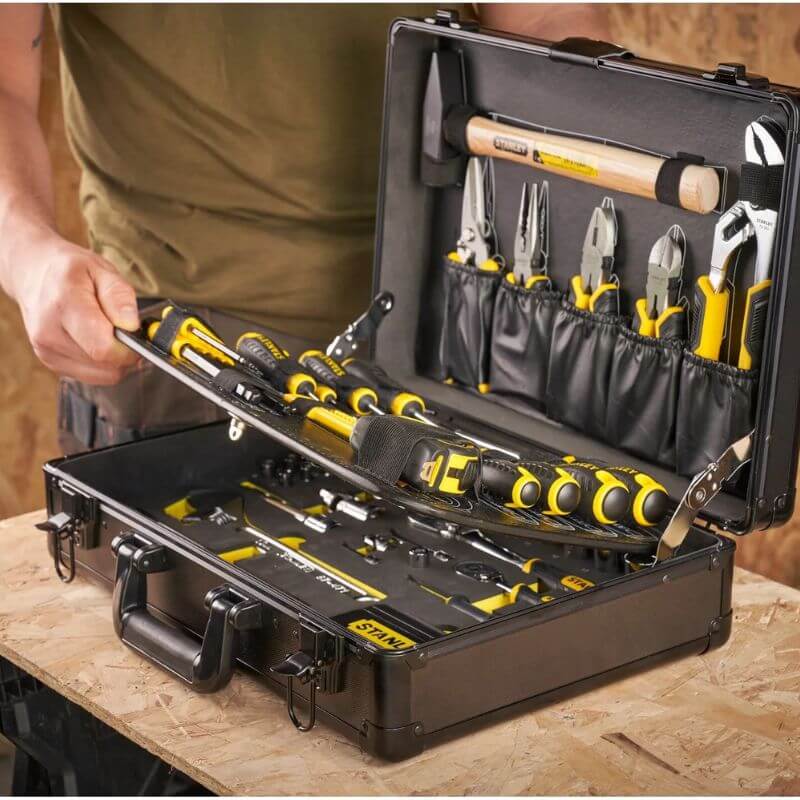
Stanley sits at the very heart of toolmaking history, to the point of becoming a global reference—especially for hand tools. Found in the toolboxes of both tradespeople and DIYers, the brand has built its reputation around iconic products that have become industry standards, such as the PowerLock tape measure or the classic utility knife. It embodies proven reliability, widely accessible and designed to stand the test of time.
Its catalog follows a logic of controlled progression, notably embodied by the Stanley FatMax range. Designed for professionals and intensive use, this line pushes tool durability further both hand and power tools to better withstand impacts, stress, and harsh conditions. Stanley thus succeeds in bridging professional demands with mass-market accessibility, offering storage and equipment solutions that are simple, solid, and functional.
For equipping oneself on solid foundations, Stanley remains a rational and time-tested choice. The brand is appreciated for its balanced performance-to-price ratio and its ability to deliver essential tools that are reliable in all circumstances. A day-to-day partner you can rely on for accurate measurements, clean cuts, and immediate efficiency, whatever the jobsite.
Derniers tests Stanley
Tests Stanley par type d’outil

Stanley Comparisons
Laser levels
Why choose Stanley?
- A historic legacy and proven reliability in the field
- The FatMax range, specifically designed for superior durability
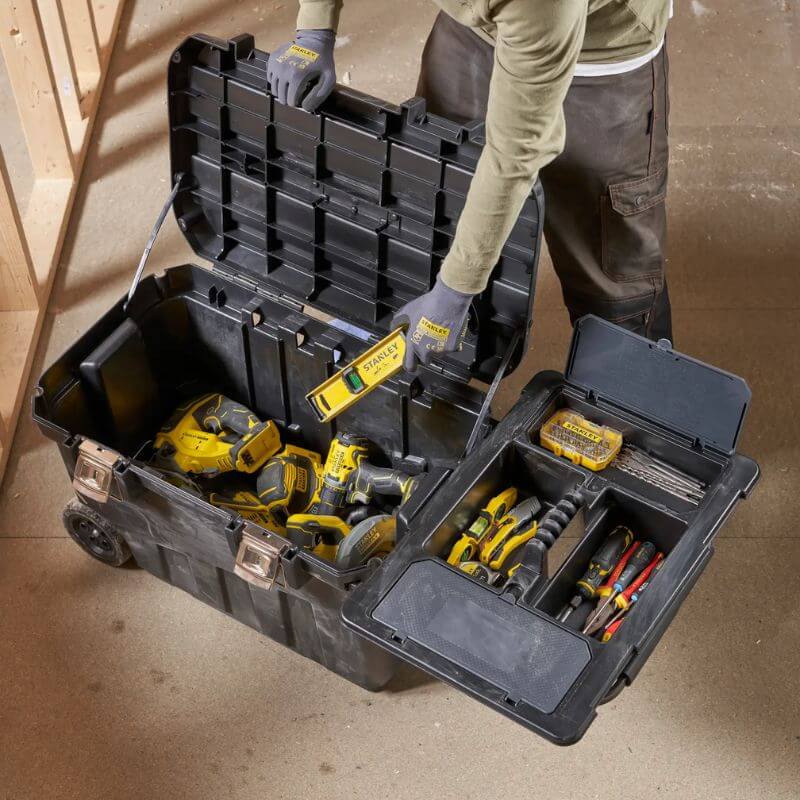
- A comprehensive offering covering both hand tools and power tools
- The V20 battery system for everyday freedom of movement
- An undisputed reference for measuring and cutting tasks
- An ideal performance-to-price ratio for long-term outfitting
Stanley FAQ – Frequently Asked Questions
What is the difference between “standard” Stanley and Stanley FatMax?
This is the key distinction to understand. Standard Stanley tools, recognizable by their yellow and black design, are mainly aimed at regular DIYers and everyday tasks. The Stanley FatMax line, on the other hand, is clearly intended for professional use. FatMax models stand out with more powerful motors, reinforced components, and ergonomics designed to withstand the real demands of jobsites.
What should you think of the V20 cordless platform?
The V20 range represents Stanley’s current generation of cordless tools. It is built around optimized lithium-ion batteries with no memory effect and very low self-discharge, delivering more power and better runtime than older 18V systems. Its main strength lies in a particularly competitive value-for-money ratio, positioned between consumer-grade tools and high-end industrial brands.
Are older Stanley batteries compatible with V20 tools?
No. The battery interface was redesigned to improve performance and reliability. As a result, V20 batteries cannot be used with older 18V tools, and vice versa. To ease the transition, the brand does offer adapters for users who wish to keep part of their existing equipment.
Is Stanley limited to hand tools?
Hand tools remain Stanley’s historical foundation, tape measures, levels, utility knives, and hammers have built its worldwide reputation. However, the brand has significantly expanded its power tool offering in recent years. Drawing on the industrial expertise of the Stanley Black & Decker group, it now offers drills, saws, and grinders capable of competing in the mid-range to professional segment.
What is the relationship between Stanley and DeWalt?
Both brands belong to the same group, but their positioning is clearly different. DeWalt targets industrial environments and extremely intensive use, with a premium orientation. Stanley, particularly the FatMax line, focuses more on building tradespeople and advanced DIYers looking for robust tools, while remaining more financially accessible.
How does the Stanley warranty work?
For power tools, especially FatMax products, Stanley generally offers a warranty extension of up to 3 years, provided the tool is registered online shortly after purchase. For hand tools, some flagship products benefit from very extensive warranties, sometimes limited lifetime, illustrating the brand’s confidence in the durability of its materials and design.